Stick Pack vs Flat Sachet: Choosing the Right Single-Dose Format
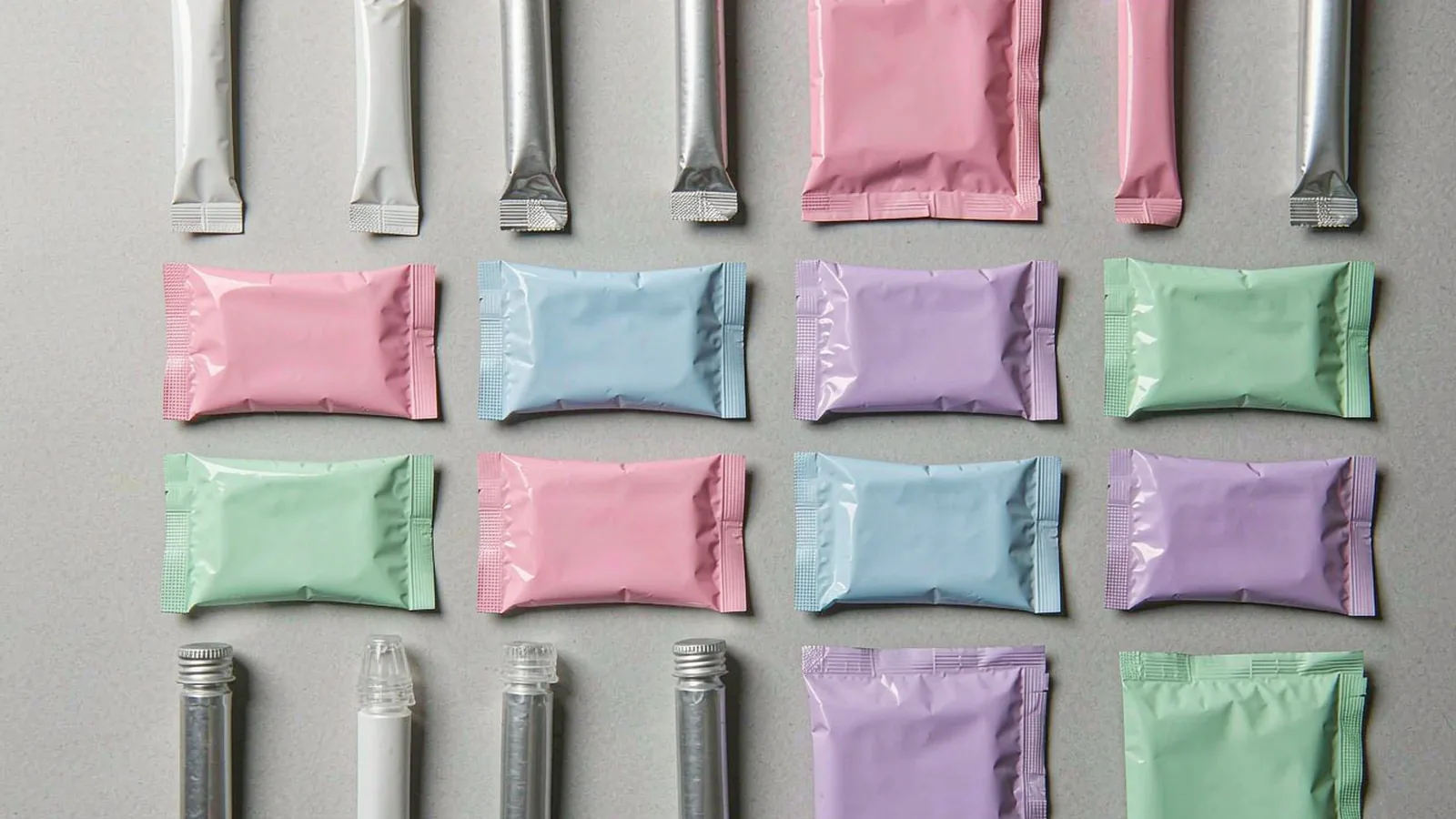
Choosing between a stick pack and a flat sachet looks like a marketing decision. It is closer to an engineering one: the format determines the film structure you can run, the dosing method that works, the achievable speed, and the shelf space your packs occupy in distribution.
This article sets out the trade-offs so you can make the decision before you talk to a machine supplier.
What each format actually is
A stick pack is a narrow, thick single-dose pack, typically formed on a horizontal form-fill-seal machine. The film is folded into a tube, filled through the open end, and sealed across the top. Because the pack is relatively thick, it stands up on a shelf and presents a large front face for print.
A flat sachet uses a four-seal format: two side seals, a bottom seal and a top seal. The film is laid flat, formed around the product and sealed on three sides. It is thinner and more flexible, and it accepts a much wider range of shapes and materials.
The main trade-offs
| Factor | Stick Pack | Flat Sachet |
|---|---|---|
| Shelf presence | Stands upright, strong front face | Lies flat, wider variety of shapes |
| Film cost per dose | Higher, more material per unit | Lower, less material per unit |
| Product-to-space efficiency | Very good | Very good |
| Product that suits it | Powder, granule, gel, viscous | Powder, granule, liquid, viscous, small solids |
| Shape flexibility | Limited — essentially one shape | Wide range of widths and shapes |
| Typical annual volume | Lower to mid | Mid to high, especially with multi-lane |
Where stick packs win
Stick packs are usually the better answer when:
- The dose is small and precise — a 2 g probiotic sachet or a single-dose vitamin works well in a stick pack.
- The product is a powder or granule — the forming tube holds fill weight reliably and the thick pack resists creasing.
- You want strong retail presence — a stick pack stands up in a display and gives you more printable surface per dose.
- Your volumes are moderate — the cost of a stick pack line suits a business that is not yet running very high volume.
Where flat sachets win
Flat sachets are usually the better answer when:
- You fill a liquid — a flat sachet handles free-flowing liquid and is the standard format for liquids such as juice concentrate, oil or cleaning products.
- You want material cost down — a thinner pack uses less film per dose, and at high volume that difference compounds.
- Your market wants visual variety — sachets can be made in a wide range of shapes, which matters for cosmetics and premium lines.
- You are running enough volume to justify multi-lane tooling — multi-lane flat sachet output is where the format really earns its keep.
The question most people ask the wrong way
Buyers often ask "which machine is better?" when they should be asking "which format does my product and my volume justify?"
A useful order of thinking:
- Start from the product — powder, granule, gel or liquid? Free-flowing or viscous? Does it need a high barrier?
- Then the dose and pack size — this drives film width and machine configuration.
- Then your annual volume — this decides whether you need one lane or several, and whether a single machine or a complete line makes sense.
- Only then, the machine — at that point the machine is a consequence of three decisions you have already made.
Running both formats on one line
It is common for a business to start with one format and add the other within a few years. Two practical notes:
- Film changeovers on a flat sachet machine are generally quicker because the sealing pattern is simpler.
- A machine specified for both formats from the start is more cost-effective than retrofitting later, particularly on the frame and drive sizing.
Film is not an afterthought
Whichever format you choose, the film structure has to match the product and the shelf life you need. A powder that is not moisture-sensitive and a probiotic that is have very different barrier requirements, and the film changes the machine's sealing window, which changes the speed you can hold.
This is why we recommend running your own film on the machine during a trial rather than accepting a machine on a datasheet.
A short checklist before you decide
- Product state: powder, granule, gel or liquid?
- Dose: fill weight or volume, and the tolerance you need to hold?
- Shelf life and storage conditions for the filled pack?
- Annual volume in units, and your realistic growth in three years?
- Does your market expect a shelf-standing pack or a flat one?
- How many different pack sizes do you plan to run on the machine?
Answer those six questions and the format decision usually makes itself.
Frequently asked questions
Can one machine run both stick packs and flat sachets?
Some machines can be configured for both, with tooling changes between them. The frame, film transport and control system need to be sized for that flexibility when the machine is specified, so it is worth saying at the order stage rather than assuming it can be added later.
Which format is more economical per dose?
At higher volume, flat sachets usually cost less per dose because they use less film. At lower volume, the difference narrows and shelf presence often matters more than material cost. The comparison depends more on your volume and your film price than on the format itself.
What about liquid products — is there a third option?
Beyond stick pack and flat sachet, flexible tubes and pouches with a spout exist for some liquid applications. They are worth considering when the product is a viscous liquid sold in small quantities, though they bring a different film structure and often a higher film cost.
Need a quote for your project?
Send us your profile drawing and capacity target — we reply with a full proposal within 24 hours.
Request a Quote