Multilayer Film Structures for Single-Dose Packaging
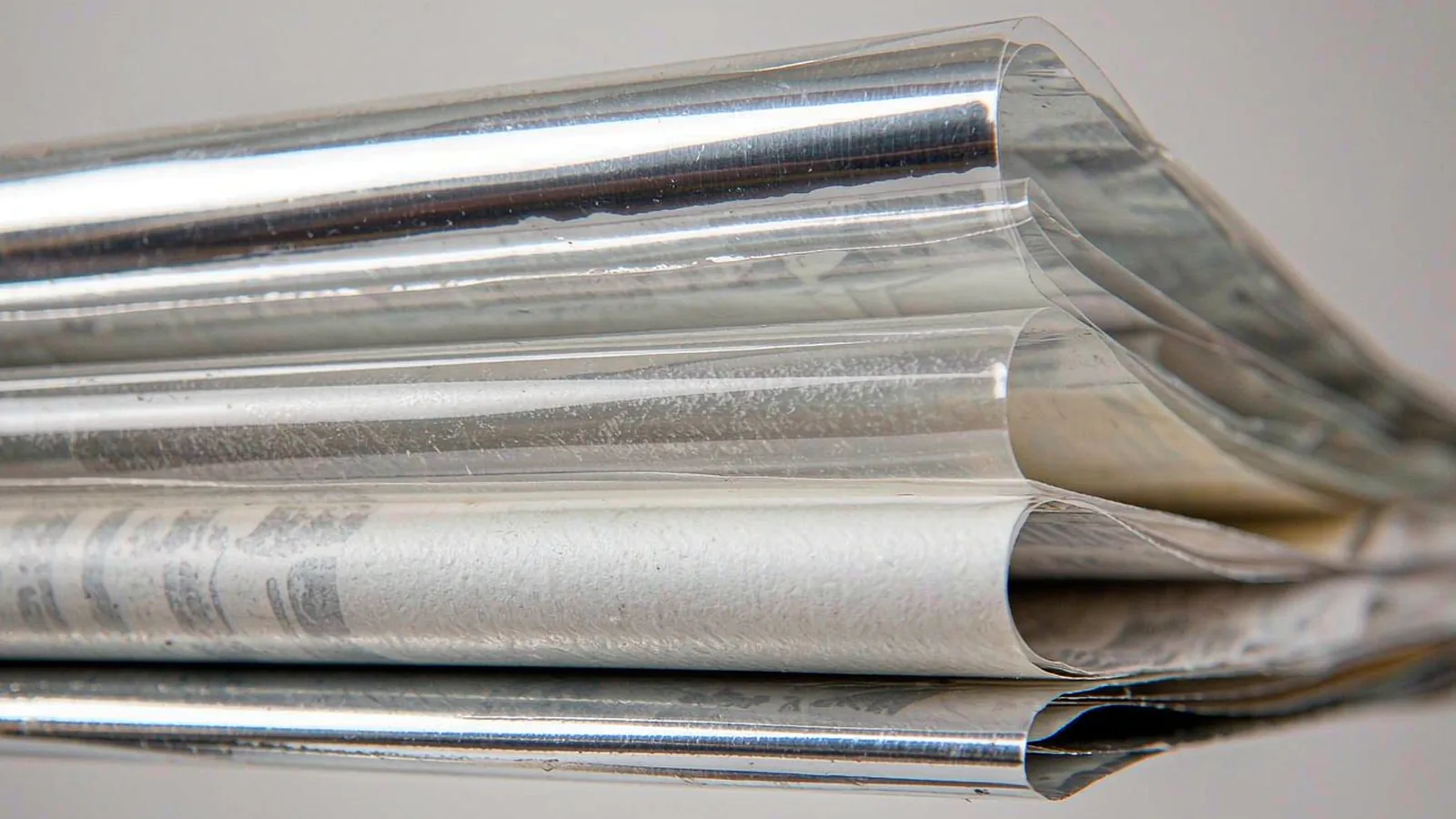
The film is usually treated as a consumable purchase. In single-dose packaging it is closer to a machine component: its structure determines the sealing window, the achievable speed, the shelf life you can claim and, ultimately, whether the product inside is still fit to sell after six months.
This article explains what each layer does and how to specify a structure for your product.
Why single-dose packs are rarely single-layer
A monolayer film is cheap but limited. If you need both a strong seal and a barrier against oxygen or moisture, you generally need layers that do different jobs. The usual construction is:
- Core — the structural layer, usually PE or PP, which carries the mechanical strength
- Barrier — PA, EVOH or PVDC, which slows gas and moisture transmission
- Seal layer — the outer layer that actually bonds to itself when heated
A common structure for a moisture-sensitive powder is something like PE / PA / EVOH / PE, with the outer PE providing sealability and the middle layers providing the barrier.
What each layer actually does
| Layer | Typical material | Primary job | Trade-off |
|---|---|---|---|
| Structural | PE or PP | Strength, print surface, dimensional stability | Heavier, more expensive than LDPE alone |
| Barrier | PA, EVOH, PVDC | Blocks oxygen, moisture and odour | PA and EVOH are moisture-sensitive and need a protecting outer layer |
| Seal layer | LDPE or LLDPE | Bonds under the sealing jaw | Limited temperature window, can seal through printed areas poorly |
| Slip agent layer | talc or amides | Prevents film blocking and improves machine handling | Reduces print adhesion and heat-seal strength slightly |
Three barriers you may actually need
Moisture. Hygroscopic products — probiotics, powders containing salt or sugar, some plant extracts — need a genuine moisture barrier. PA and EVOH work; a PE/PP laminate without a barrier layer does not.
Oxygen. Oiled products, some nutraceuticals and anything with a strong odour need an oxygen barrier, usually EVOH or PVDC.
Light. If the product is photosensitive, a barrier layer with titanium dioxide pigment or an opaque structure is needed. This is a packaging design decision as much as a material one.
The three things that limit your film choice in practice
1. The sealing window
Every film has a temperature range within which it seals reliably. Below it, you get a weak or leaking seal. Above it, the film distorts, shrinks and often blocks. The window is narrower on some structures than others, and it shifts as film age and humidity change.
This is the single most important practical constraint. A film with excellent barrier properties and a narrow sealing window will cap your line speed no matter what the datasheet says.
2. Print registration
Multi-colour printing needs a surface that holds registration at speed. If you print before form-fill-seal, the print registration system on the machine must compensate for film stretch. Highly extensible films are harder to print accurately than stiffer structures.
3. Film handling on the machine
Extensible film stretches and can wrinkle. Very stiff film can crease at the forming shoulder and cause seal leakage. Films also block if they are too warm — a problem in warm climates and at line speed. Slip agents help, but the right choice is a film developed for the machine rather than for the application alone.
Specifying a film: the questions to answer
- What is the product's sensitivity? Moisture, oxygen, light, odour — or none of these.
- What shelf life do you need to claim? This sets the barrier performance target, and therefore the layer structure.
- What pack size and film width? This sets the web width and the former size.
- What is the film supply situation? In-house extrusion, a qualified supplier, or open to either. This affects who optimises what.
- What is your expected run length? Long runs favour a structure tuned for speed; short runs favour easier changeover and lower material cost.
- What printing is required? Number of colours, varnish, and whether printing happens on the machine or on a separate line.
Getting the film and the machine to agree
The most reliable approach is to bring the film and the machine together early:
- Send film samples before you order the machine, not after
- Run the film on a trial and record the sealing window you actually achieve
- Note the speed you can hold at that setting on your product
- Record those numbers as your production baseline for acceptance
Film behaviour cannot be reliably predicted from a datasheet. Two structures from two suppliers can differ more than two structures from the same supplier.
Frequently asked questions
Does a thicker film always seal better?
No. Seal strength depends on the seal layer's composition and the temperature, not only on total thickness. A well-made thin film with a dedicated seal layer often performs better than a thick film whose outer layer is not designed for sealing.
Can one film work for several products?
Sometimes, but every additional product in the same film raises the barrier requirement for all of them. Running a range from one structure is simpler operationally but can push your material cost above what the simpler products need. A common compromise is two structures on one machine.
Should we buy film extrusion in-house?
It makes sense at higher volume, or when barrier performance is a differentiator and no supplier offers what you need. At lower volume, a qualified film supplier plus a machine configured for their material is usually the more economical route, and it keeps your capital on the packaging line itself.
How do we know if the film is performing?
Define a baseline at commissioning: sealing window, achievable speed, fill weight tolerance and reject rate on your own product. Re-check periodically, and after any film supplier or structure change. Without a baseline, "the film feels different" is not a diagnosis.
Need a quote for your project?
Send us your profile drawing and capacity target — we reply with a full proposal within 24 hours.
Request a Quote